


By Bobby Anderson, RN

Global electricity demand is set to rise sharply over the next decade and we may all be footing the bill for it through higher utility rates thanks to energy-leaching data centers.
A recent UN report says demand will rise by over 10,000 terawatt-hours by 2035. This increase is roughly equal to the total electricity consumption of all advanced economies today.
A new AARP survey finds that 75% of Americans, regardless of political party, believe state policymakers should work to ensure that residential utility customers do not pay for the costs of serving new large data centers, including the massive artificial intelligence (AI)-related facilities coming online across the country.
Reporting from multiple Oklahoma news organizations shows at least 18 data center projects in Oklahoma driven heavily by AI-related power consumption needs are either under construction or awaiting approval.
Although the survey was conducted nationally, the findings carry particular urgency in Oklahoma, where data center development is accelerating at an unprecedented rate.
The survey shows an overwhelming public agreement, with 78% of respondents saying data centers, not residential customers, should cover their own electricity and water costs associated with their large-scale operations.
“These findings reinforce what we’re hearing from thousands of Oklahomans who say utility bills are already too high, and they can’t afford a penny more,” said AARP Oklahoma State Director Sean Voskuhl. “Residential customers must be protected from massive data centers and utility companies that want to leave customers holding the bag.”
One Oklahoma senator is trying to slow the process down until we better understand who is going to pay for it.
In January, Senator Kendal Sacchieri (R-Blanchard) introduced Senate Bill 1488, legislation that would establish a moratorium on the construction of new data centers in Oklahoma until November 1, 2029 and direct the Oklahoma Corporation Commission to study the long-term effects these large facilities may have on state infrastructure and resources.
The moratorium would pause new data center development while the Corporation Commission conducts a comprehensive review of key concerns, including water supply impacts, utility rate pressures, property value effects, and optimal siting practices.
The bill requires the Commission to submit its findings and recommendations to the Legislature to inform future policy decisions.
“As data centers continue to grow rapidly across Oklahoma, we are confronting serious unknowns about how these large facilities affect our communities, our utilities, and our natural resources,” Sen. Sacchieri said. “This bill stems from those unknowns, and there are real, serious concerns around what these data centers will bring to our state negatively. We must be sincere in addressing these unknowns and finding the best solutions for the erection of these very large facilities. There may be better solutions out there than what we are currently doing — which is allowing data centers to be sited anywhere and everywhere without thinking through the long-term effects and repercussions.”
By pausing further development, the state can gain empirical evidence on how large-scale data centers interact with Oklahoma’s infrastructure and environment, and tailor regulations that protect residents and ratepayers without undermining economic prospects.
“The goal is not to halt progress,” Sen. Sacchieri added, “but to ensure that progress does not come at the expense of Oklahomans’ quality of life or their utility costs. We owe it to our communities to understand what we don’t yet know before we make irreversible decisions about where and how these facilities are built.”
Additionally, the survey shows that older Americans are increasingly worried about rising electricity costs, with 69% of adults 50-plus reporting their electric bills increased in the past year and 78% expressing concern about future increases.
“People are already sacrificing and being forced to choose between food, medicine and keeping the lights on,” Voskuhl said.
Voskuhl said AARP Oklahoma is hopeful residential customers will see relief this year with legislation filed by Rep. Brad Boles (R-Marlow) that aims to prevent higher utility rates for families, seniors, and small businesses as data center expansion accelerates.
“As Oklahoma faces a wave of large load users like data centers, we need strong guardrails at both the Legislature and the Corporation Commission to ensure Oklahomans are not forced to foot the bill,” Voskuhl said.
Voskuhl noted that AARP Oklahoma has long advocated on behalf of residential customers. “We need hard working Oklahomans to stand up and oppose any utility rate proposal that shifts data center-related infrastructure costs onto consumers,” he said. “If people stay silent, they will pay the price.”
Utility customers can take action online at waction.aarp.org/OKNoRateHikes.
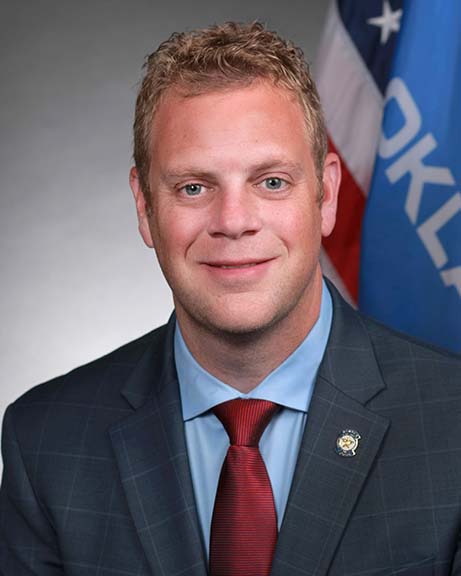
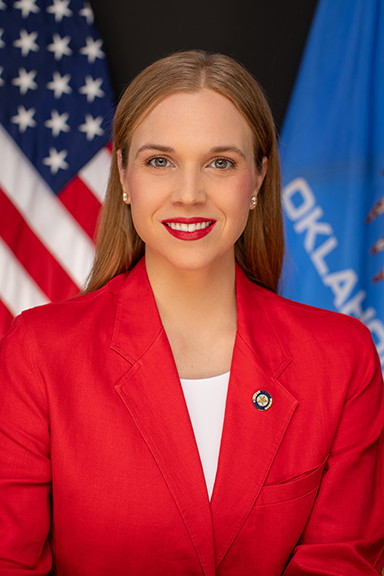
Oklahoma Representative Brad Boles (R-Marlow) and Senator Kendal Sacchieri (R-Blanchard) are introducing separate legislation to help shield Oklahoma utility ratepayers from a surge in data center construction. – Photos Provided (R-Marlow) and Senator Kendal Sacchieri (R-Blanchard) are introducing separate legislation to help shield Oklahoma utility ratepayers from a surge in data center construction. – Photos Provided