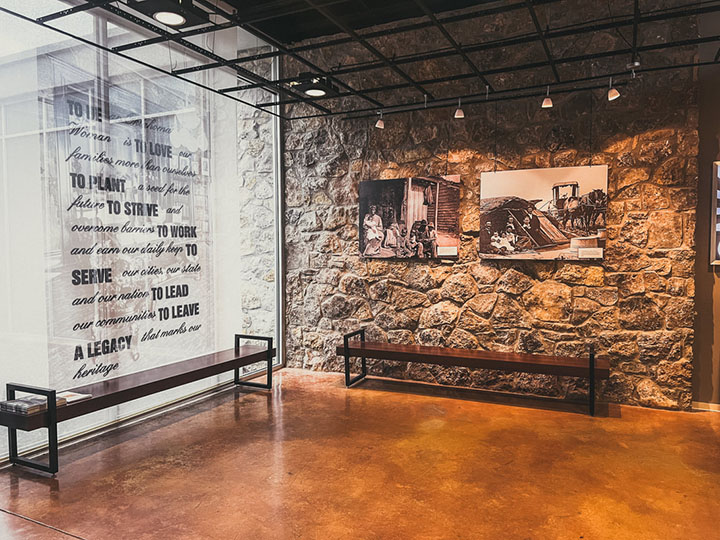


On Saturday, December 13, from 1-2 p.m., the Pioneer Woman Museum and Statue will present a free lecture on 19th-century mourning practices and traditions of death in the Victorian era. Historical interpreter Keith Fagan will discuss the era’s connection to the holiday season and ghost stories, most notably featured in Charles Dickens’ “A Christmas Carol.”

The Victorian era was the time period between 1837 and 1901. At that time, life expectancy was limited to around 50 years. During the 19th century, people died from disease due to a lack of medical care, inadequate food supplies, industrial accidents and war. Women often perished due to complications in childbirth, and children succumbed to disease. While the Industrial Revolution brought new advancements, it also created a hazardous environment for workers. Learn more about the elaborate customs of mourning practiced in the Victorian era, in which death was commonplace.
Mourners wore elaborate mourning clothing, placed flowers and stopped clocks at the time of death. In the Victorian era, public parks were being established and urban cemeteries offered picturesque spaces for interring family members. Stone monuments and gravestones became increasingly elaborate.
The lecture will take place during the annual Holiday Open House at the Pioneer Woman Museum and Statue, which will be held on Saturday, December 13, from 10 a.m.-5 p.m. The site will have free admission to all galleries, along with special holiday deals in the gift shop and a hot chocolate bar.
___________________________________________________________
The Pioneer Woman Museum is located at 701 Monument Rd. in Ponca City. For more information, please call 580-765-6108 or visit pioneerwomanmuseum.com.
The Pioneer Woman Museum and Statue is a division of the Oklahoma Historical Society. The mission of the Oklahoma Historical Society is to collect, preserve and share the history and culture of the state of Oklahoma and its people. Founded in 1893 by members of the Territorial Press Association, the OHS maintains museums, historic sites and affiliates across the state. Through its research archives, exhibits, educational programs and publications, the OHS chronicles the rich history of Oklahoma. For more information about the OHS, please visit okhistory.org.