

By Van Mitchell, staff writer

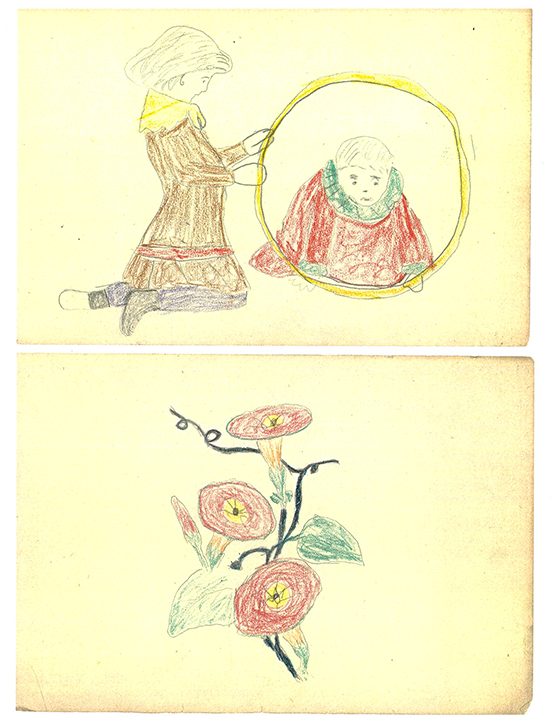
The Oklahoma Territorial Museum and Carnegie Library in Guthrie, located at 406 E. Oklahoma Avenue in Guthrie is partnering with the International Research and Archives Network (IRAND) on an exhibit highlighting artwork by Cheyenne and Arapaho children who attended the Seger Indian Training School in Washita County.
Staff at the museum will work with the National Cowboy & Western Heritage Museum in Oklahoma City to create the exhibit, which will be available to international audiences in the coming year.
John Homer Seger founded the Seger Indian Training School in the late 1800s. There were approximately three dozen buildings on the grounds, including a school, hospital and dormitories. The facility closed in 1941.
The two museums in Oklahoma are now the first in the United States to join the international effort to highlight children’s artwork and experiences represented in archives and research institutions worldwide.
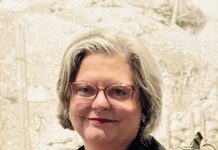
Erin Brown serves as Curator of Collections at The Oklahoma Territorial Museum and Carnegie Library.
She said IRAND is a subcommittee of the UNESCO Memory of the World program.
UNESCO, the United Nations Educational, Scientific and Cultural Organization, is a specialized agency dedicated to strengthening international cooperation in the fields of education, science, culture, and information.
“So, this Memory of the World program, they have projects and programs all over the world and they
focus on endangered cultures and history,” Brown said. “So, for instance, they have programs and projects in Sudan. They have projects in Ukraine right now. And this could be anything from war, conflict, climate change, population decline, anything that threatens the continuation of learning about a culture or whatever, anything that threatens it to be disappearing within the next couple of generations. They’re working to preserve those cultures, those histories, those legacies around the world.”
Brown said IRAND as a subcommittee focuses specifically on the experiences and stories of children that are housed in university research archives, libraries, any of these projects, any of these things, stories around the world.
“They’re trying to preserve the experiences of children,” she said. “So, when they learned about these drawings that we had from the Seger School, they were interested in how children back then viewed their own culture versus white culture, this assimilation process? How did this work? How did the tribes respond to this?”
Brown said she is currently doing research on the school itself and how it operated and the people associated with it.
“We do have a list of names of the children that produce the drawings,” she said. “So, I have not yet reached out to the Cheyenne Arapaho tribe. I needed to get my foundational history down before I started asking specific questions for them, but we’re going to get trying to reach out to some of these families, these descendants and get their feedback on what their history, what their legacy, what their story, what their experience with the school has been, and then putting this together. I’m inviting people who may have stories regarding the Seger School to reach out to me. I’d love to hear from them. I want to be sure to give an accurate and honest depiction of this history.”
The Oklahoma Territorial Museum and Carnegie Library is a division of the Oklahoma Historical Society. The mission of the Oklahoma Historical Society is to collect, preserve and share the history and culture of the state of Oklahoma and its people. Founded in 1893 by members of the Territorial Press Association, the OHS maintains museums, historic sites and affiliates across the state. Through its research archives, exhibits, educational programs and publications, the OHS chronicles the rich history of Oklahoma.
Brown said the museum received the children’s artwork from descendants of Florence Hitchcock who worked for the US Deputy Marshals office in Guthrie, in the Oklahoma Territory.
“She deputized because in her work as stenographer and processing all the legal documents, she had to be deputized to have that authority,” Brown said.
She said Hitchcock traveled to Seger and made friends with the people there.
“She made friends with the tribal members. She made friends with the students there. She made friends with the Seger family,” Brown said. “And so, she went out there several times personally and on professional business and just maintained that relationship. And so, when she was there, that’s when she acquired these drawings.”
Brown said after renovations and repairs to the Carnegie Library are completed, the artwork exhibit will be housed there.
Brown said she hopes people walk away from the exhibit with knowledge of the past and how Native tribe members were impacted then and now.
“I would like to introduce them to stories and people that they may not be aware of,” she said. “There’s a lot of people outside of Oklahoma around the country and around the world that have never heard of the various tribes. They don’t have an awareness that Native American tribes are active today. They don’t really have an awareness that even these boarding schools, some of them are still active today.”
She continued, “There’s still this process going on, and that preserving the cultures and the languages of these various tribes, including the Cheyenne Arapaho is a daily struggle. Even though these drawings were done 100 years ago, this process is still happening, and people are still working to preserve their own identities, their Native identities, and their Native cultures.”
For more information on The Oklahoma Territorial Museum and Carnegie Library call (405) 471-8568. For more information about the OHS visit okhistory.org.