

Villages OKC luncheon challenges the idea that growing older means decline and need
Special to Senior News and Living by Eddie RoachOklahoma City leaders got an assignment along with their lunch recently: decide what they will do about aging. Many of us have been taught to see age as a long decline toward frailty and dependence. Villages OKC wants Oklahoma City to see it differently.
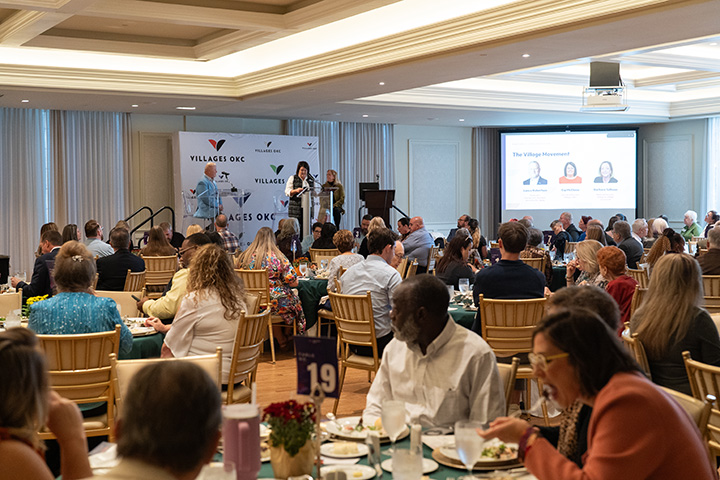
At its Aging Redefined luncheon at the Oklahoma City Golf and Country Club, the nonprofit argued that aging is not a “they” problem but a “we” reality. Everyone ages, and how we do it depends on us. We can treat later life as a lesser experience, or as a fact that says nothing about a person’s worth or ability to contribute.
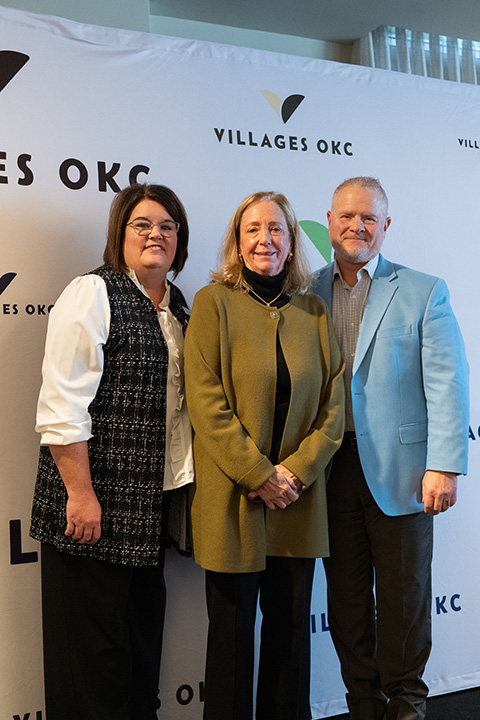
At the luncheon, Lance Robertson, former U.S. assistant secretary for aging who was Oklahoma’s director of aging services for more than a decade, moderated a conversation with Villages OKC Executive Director Kip McElwee and Barbara Sullivan, national director of the Village to Village Network.
McElwee opened with the numbers. About 700,000 of Oklahoma’s 4 million residents are 65 or older, she said. Within five to seven years, the state will for the first time have more people over 65 than under 18.
Most older adults, Villages OKC says, are vibrant, living full lives and eager to support one another.
“Villages is not a place,” McElwee told guests. “It’s a connection.” Members are not only people who receive help. They are neighbors, volunteers and friends with skills and experience to share.
The Village movement’s core conviction is that isolation is a thief. Villages leans on research showing that people live with vitality and purpose when they do life with others. Friendship, belonging and purpose, McElwee said, come from community rather than institutions, and staying at home is not the same as staying connected.
Sullivan, visiting Oklahoma for the first time, traced the Village movement to Boston 25 years ago, when homeowners decided they wanted to stay in both their homes and their communities. About 300 Villages now operate in 42 states and the District of Columbia, most as grassroots nonprofits built on neighbors helping neighbors. Villages OKC is the only Village in Oklahoma.
Sullivan highlighted the “missing middle,” older adults who earn too much for public programs but cannot afford private help, and the growing number of people aging alone. She pointed to Rhode Island, where 13 villages share one central office, as a model Oklahoma might consider.
“Aging is a housing issue, a transportation issue, an economic issue, and a workforce issue,” she said. “It belongs to all of us.”
Robertson said Villages OKC has natural partners at hand: an established relationship with Metro Technology Centers, a developing relationship with the YMCA, more than 400 churches in the metro area, 39 tribes and private employers facing their own caregiving-related workforce strain. He tied the effort to the “Oklahoma Standard,” the state’s habit of pitching in when needs are identified. Drawing on his years in Washington, he recalled telling a senator that the programs government delivers only scratch the surface. The real answer, he said, is community by community and household by household.
He urged guests to take Villages’ preparedness course – The GIFT (Gathering Information for Transitions) – and to plan ahead with their own families.
Robertson closed with a challenge. He wants Oklahoma City to be the national gold standard for villages, not merely a “that’s cute, feels good” example. That, he said, takes more than one lunch. Guests should each commit to two or three concrete actions through their companies, churches or organizations, because “It cannot be left up to Kip.”