

Story and photos by Darl DeVault, contributing editor

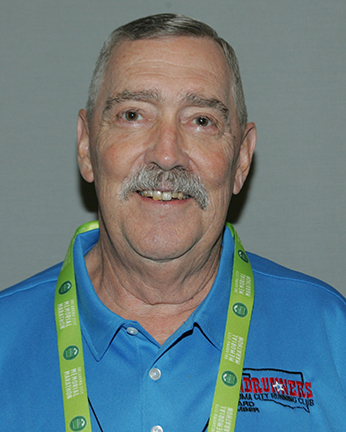
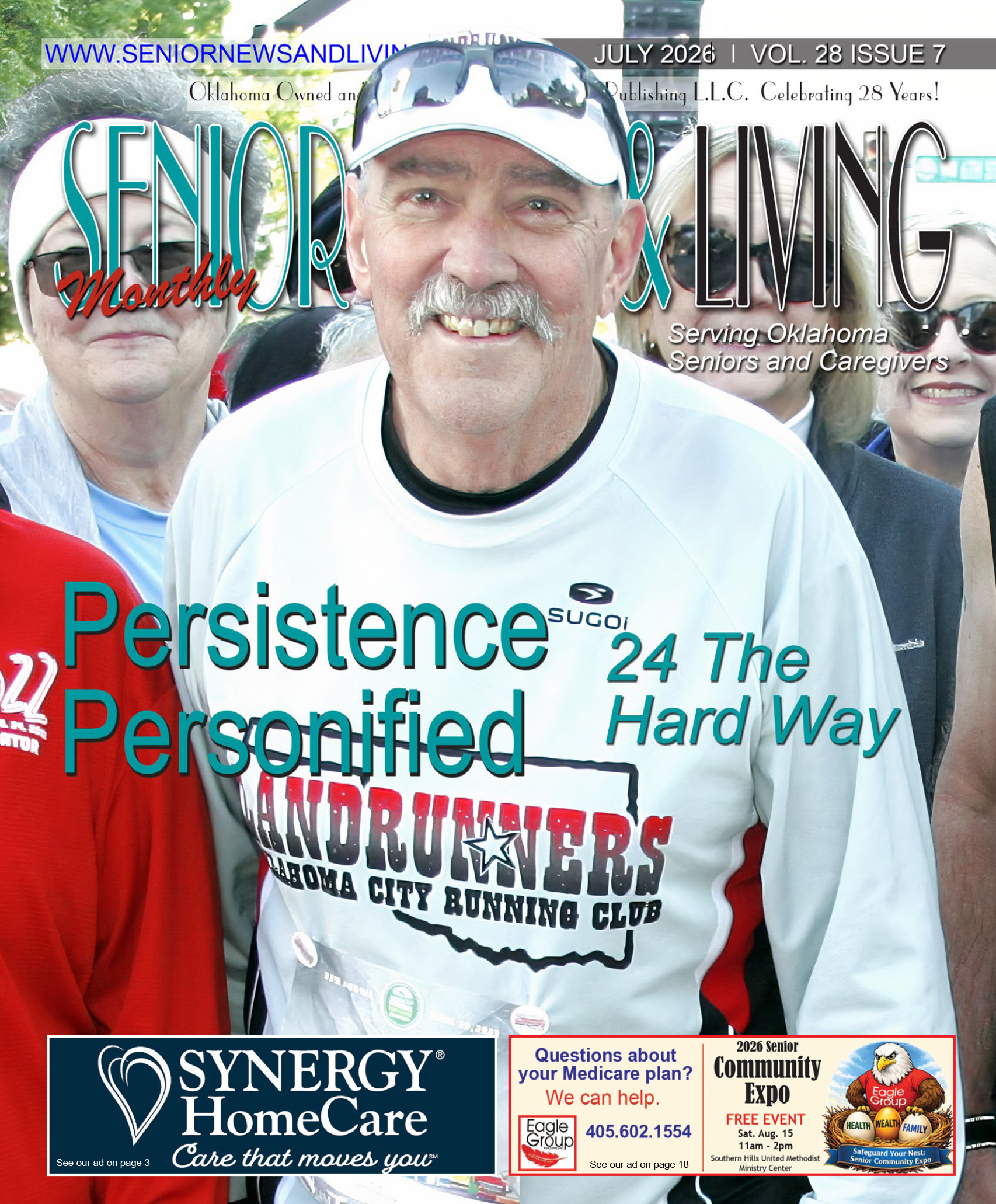
Despite health concerns over the years, Kevin Lynes, 69, is an accomplished distance runner who sees his longevity and fitness as a byproduct of running. His story demonstrates that, with proper medical guidance, running can be safe even with health challenges such as his heart condition.
He first joined Weight Watchers in 2004 and began running two miles at a time. He discovered his love for running at age 48, once his children had grown up. A co-worker soon encouraged the Yukon resident to start participating in races, starting with a 5K run (3.1 miles).
He joined the Landrunners Oklahoma City Running Club, which took its name from the famous 1889 Land Run. He began training with other new runners and finally ran his first marathon in Chicago in 2006.
“Training in a group here and running the first marathon in such a big event as the Chicago Marathon, I was hooked!” Lynes said. “I began running 2-3 marathons a year and was encouraged to try longer distances. I began running ultra marathons, which are longer than a marathon, usually 50K (31 miles) and up.”
The Oklahoma City Landrunners (officially known as the Oklahoma City Running Club) has more than 600 club members. This makes it the largest nonprofit, all-volunteer running organization in Oklahoma.
Lynes has served on the Landrunners’ board of directors for 20 years and served as president for 3 years.
Lynes is a manager at O’Steen Meat Specialties, Inc. in Oklahoma City. He shared what he has learned about his health with “Senior News and Living” while volunteering at his running club’s booth during packet pickup on Friday at this year’s Oklahoma City Memorial Marathon Expo in late April.
He was soon trying the longer events in what is called 24 The Hard Way, beginning with a 6-hour, then a 12-hour, and finally the full 24-hour race.
“I ran 51 miles in the 12-hour race and the next year ran 80 miles in the 24-hour race,” Lynes said. “Here is where my story changes.”
Having been diagnosed with a heart murmur as a small child, after his first 24-hour race, he had an echocardiogram and was diagnosed with critical aortic stenosis. Stenosis is the narrowing of the valve opening, severely restricting blood flow from the aorta.
“After a series of tests, I needed open heart surgery to replace my aortic valve,” Lynes said. “I was born with a bicuspid (two-leaflet) valve, where a normal valve is a tricuspid (three-leaflet) valve, and that was the cause of my heart murmur and stenosis.”
He underwent surgery at the Oklahoma Heart Hospital in 2013, nine years after beginning serious running. He also had surgery on both feet because of arthritis that had bothered him for several years after the heart surgery.
After a long and difficult recovery, the dedicated runner resumed training and took on more marathons and ultramarathons. “I had to give up both distances in 2018 due to a severe back injury from arthritis. As of 2018, I had run 24 full marathons and 10 ultra marathons and was on hold from any real long distance.” Lynes said.
He has participated in the Memorial Marathon full marathon 10 times and the half marathon six times. He ran the finishing distance with ease in the inaugural OKC Memorial Marathon cumulative Senior Marathon presented by Mercy in 2023, starting on the front line. This year, he walked and ran it at a more leisurely pace.
“I had been running half marathons as my longest distance starting in 2018, but in 2025, I ran the Oklahoma City Memorial Marathon quarter marathon (6.55 miles), down from half marathons due to arthritis in my feet.”
He was running much more slowly than before, and he thought it was due to his arthritis flaring up. When he had his yearly echocardiogram in November of 2025, he had developed stenosis again.
“My cardiologist said my slower pace was most likely due to the stenosis combined with arthritis,” Lynes said. “After another series of tests, I was qualified to get a transcatheter aortic valve replacement (TAVR), which is a valve that is inserted into the old valve through the femoral artery without cutting the chest open.”
“I had that surgery on March 30, 2026. It was a very easy procedure and had no pain, but I had to be off for 2 weeks with no driving. This valve will last 8-10 years on average, so another heart surgery is likely at that time.”
“I’m not worried about it since we never know what technology will exist in 8-10 years. Less than 30 days after getting the TAVR valve, I was able to run the OKC Memorial quarter marathon very slowly with a group of friends.”
“The point of my story is that resilience and effort can overcome physical limitations,” Lynes said. “If your goal is to walk, run, bike, or hit the gym, start today. It transformed my life, and it can do the same for you. I am very blessed!”