


Ryoki Yamaguchi to Perform on Kilgen Theatre Organ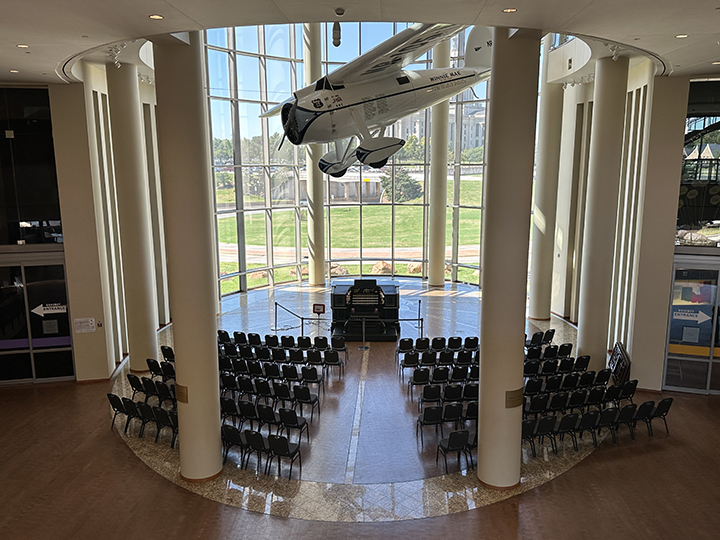

On Monday, September 21, from 7 to 8:30 p.m., a Kilgen Theatre Organ performance will be held in the Devon Great Hall at the Oklahoma History Center featuring guest organist Ryoki Yamaguchi. His performance encompasses several American standards, aligning with his theme of “Welcome Traveler.”
Yamaguchi was born and raised in Japan. He said his mother’s piano led to his lifelong love of music. When he was 22, Yamaguchi was hired to be a featured organ artist for the Roland Corporation. He performs professionally worldwide and is trained on a classical pipe organ.
Tickets are $10 for Oklahoma Historical Society members and $20 for the general public. They can be purchased online or by calling 405-522-0765.
The Oklahoma History Center is located at 800 Nazih Zuhdi Dr. in Oklahoma City.
Dr. Sara Doolittle to Discuss New Book During Talk at Oklahoma Territorial Museum in Guthrie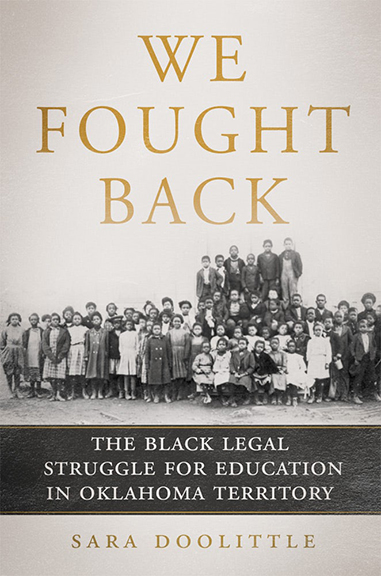
Dr. Sara Doolittle will present an author talk and book signing at the Oklahoma Territorial Museum and Carnegie Library on Wednesday, September 2, starting at 6 p.m. Doolittle’s new book, “We Fought Back: The Black Legal Struggle for Education in Oklahoma Territory,” was released in August. Books will be available for purchase during the event.
Most people are familiar with the landmark 1954 U.S. Supreme Court decision Brown v. Board of Education, which held that state laws mandating racial segregation in public schools were unconstitutional. But what about the court cases that far preceded, and informed, this national ruling? They took place in smaller courts, in unsung parts of the United States, including in Oklahoma Territory. Decades before Brown v. Board, Black citizens in Oklahoma Territory worked to challenge legislation and local school board restrictions that segregated their schools. In “We Fought Back,” Doolittle analyzes a rich array of previously unexplored court challenges during Oklahoma’s territorial period (1889–1907), revealing how Black residents’ cases reshaped understandings of race, citizenship, and the federal role in American schooling.
Doolittle is an assistant professor in the Department of Educational Sciences, Foundations, and Research at the University of Central Oklahoma. Her scholarship explores the intersection of law, race and schooling, with a particular focus on 19th-century school segregation law. Doolittle brings more than two decades of experience as a high school English teacher to her work. A proud product of public schools, she earned her B.A. from the University of Kansas, her M.A. from the University of Colorado, and her Ph.D. from the University of Oklahoma.
The event is free and open to the public. The Oklahoma Territorial Museum is located at 406 E. Oklahoma Ave. in Guthrie. For more information, please call 405-282-1889.
Caleb Gayle, Author of “Black Moses, Guest Lecture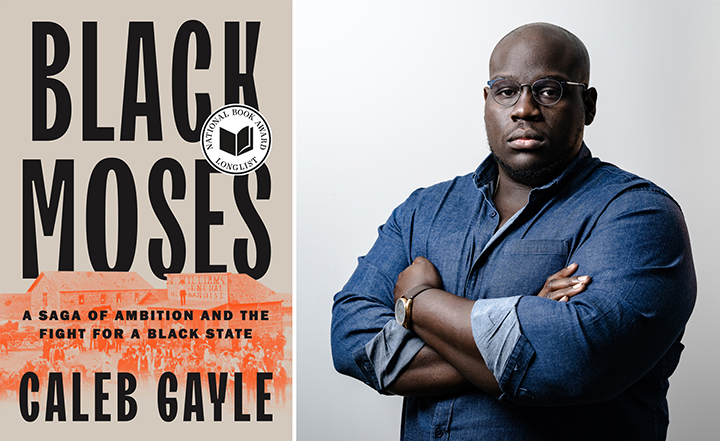
The Oklahoma Historical Society will host Caleb Gayle for a guest lecture at the Oklahoma History Center in Oklahoma City on Thursday, September 24. The event will be held from 7 to 9 p.m., and doors will open at 6:30 p.m.
Caleb Gayle is an award-winning journalist and the author of “Black Moses: A Saga of Ambition and the Fight for a Black State” and “We Refuse to Forget: A True Story of Black Creeks, American Identity, and Power.” A professor at Northeastern University in Boston, he is a contributing writer at The New York Times Magazine.
“Black Moses” charts the rise of Edward McCabe and his efforts to create a Black state in Oklahoma Territory during the late 19th and early 20th centuries. Longlisted for the National Book Award for Nonfiction, the book has received numerous accolades, including the Stubbendieck Great Plains Distinguished Book Prize and the Oklahoma Book Award for Nonfiction. The Oklahoma Historical Society recognized “Black Moses” with the E. E. Dale Award for Outstanding Book on Oklahoma History.
After the lecture, there will be a question-and-answer session, followed by a book signing and reception. Copies of “Black Moses” will be available to purchase during the event.
The event is free and open to the public. Registration is requested at okhistory.org/signing.
the Oklahoma Civil Rights Trail Grant Program, which supported projects across the state to preserve and share Oklahoma’s civil rights history.
“Crossroads of America: Oklahoma’s Route 66” to Make TV Debut on OETA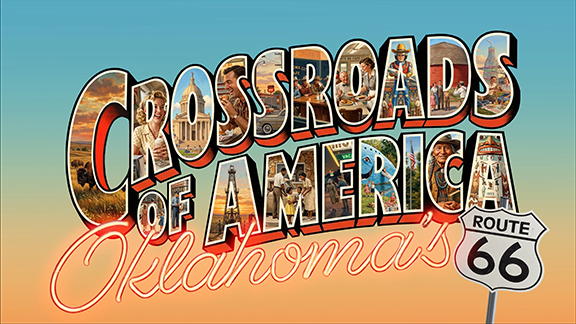
The Oklahoma Historical Society, in collaboration with director Bryan Beasley, producers Jon and Jaime Roman, and with support from the Inasmuch Foundation, has produced “Crossroads of America: Oklahoma’s Route 66.” This documentary examines the evolution of Route 66 in Oklahoma, from the hardships of the Dust Bowl era to the era of nostalgic road trips. It explores the highway’s history and future through interviews with historians, interactions with small-business owners, and scenes created using virtual production technology. The film will be shown publicly for the first time on Saturday, August 29, at 4 p.m. on OETA.
Oklahoma contains the longest stretch of drivable Route 66 in the United States. As the highway extends from Chicago to Santa Monica, its route through the Oklahoma Plains reveals narratives of community and connection. The documentary documents this history statewide, featuring interviews with business owners, entrepreneurs, historians, and other prominent Oklahomans. Originally envisioned by early planners, the road required 11 years to complete. Roadside attractions, cinematic influences, and increased travel after World War II contributed to its popularity. For many travelers, Route 66 represented freedom and a distinctive way to experience the country. Today, travelers continue to value Route 66 by engaging with historic sites and developing new perspectives on its significance.
Supported by the Cherokee Film Commission, key scenes were filmed at Cherokee Film Studios utilizing the LED XR wall and volumetric production technology to recreate pivotal moments with enhanced depth and detail. The 80-foot curved LED XR wall serves as an alternative to traditional green screens, allowing directors to position real-time 3D environments behind actors and props and to capture visual effects within the studio. In “Crossroads of America,” these technologies produced vivid night skies, landscapes, and scenes that evoke the experience of traveling along the historic highway.
Director Bryan Beasley maintains a longstanding collaboration with the Oklahoma Historical Society. His career began with the acclaimed documentary “Unconquered: Allan Houser and the Legacy of One Apache Family,” narrated by Val Kilmer, and the historical narrative “The Battle of Honey Springs.” Beasley and OHS Executive Director Trait Thompson further collaborated on the 2023 documentary “The People’s House: The Story of the Oklahoma State Capitol.”
The documentary is scheduled to air on OETA on Saturday, August 29, at 4 p.m. Additional screenings are being planned across the state.
New Route 66 Documentary to be Shown at Tee-Pee Drive-In in Sapulpa
On Sunday, September 13, at 8 p.m., there will be a free screening of the new documentary “Crossroads of America: Oklahoma’s Route 66” at the Tee Pee Drive-In in Sapulpa on historic Route 66. A trailer for the documentary is now available on the Oklahoma Historical Society’s YouTube channel.
The Oklahoma Historical Society, in collaboration with director Bryan Beasley, producers Jon and Jaime Roman, and with support from the Inasmuch Foundation, has produced “Crossroads of America: Oklahoma’s Route 66.” This documentary examines the evolution of Route 66 in Oklahoma, from the hardships of the Dust Bowl era to post-WWII road trips. It explores the highway’s history and future through interviews with historians, interactions with small-business owners and scenes created using virtual production technology filmed at the Cherokee Film Studios.
A Q&A with Trait Thompson and Bryan Beasley will follow the screening. No admission is required to attend the screening, but attendees must RSVP online to ensure there is enough room.